Arthur Hayes Returns to Lead Flop Labs Ahead of FLOP Launch
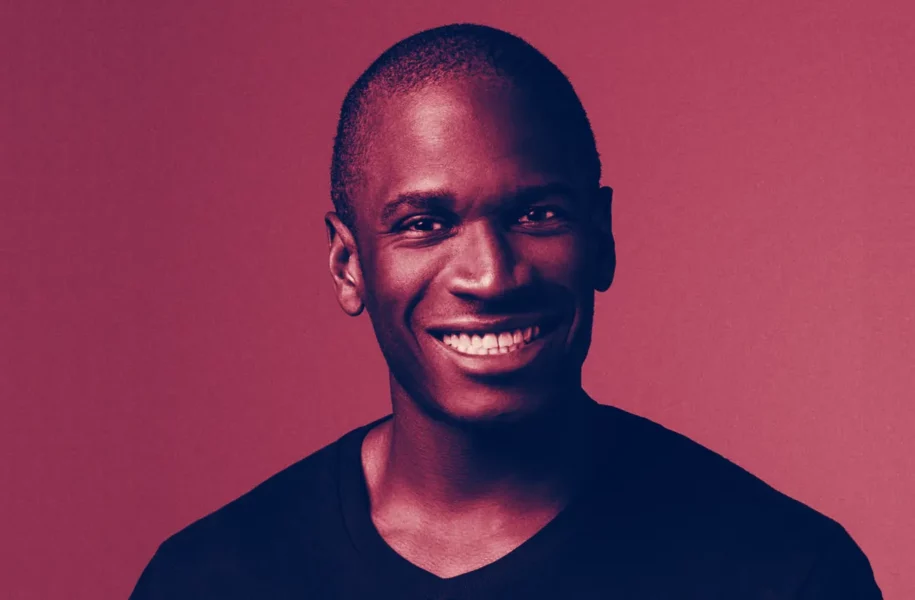
Arthur Hayes is returning to an operating role in crypto, but his next project looks considerably different from the derivatives exchange that made him one of the industry's best-known founders.
Summary:
- Arthur Hayes has taken the CEO role at Flop Labs after years away from day-to-day crypto project leadership.
- FLOP is designed as a payment and settlement asset for autonomous AI agents.
- The project says there will be no presale or venture-capital allocation.
- Flop Labs plans a Q4 2026 airdrop, followed by its network launch in Q1 2027.
The BitMEX co-founder said in X on August 18 that he is “coming out of retirement” to lead Flop Labs, a startup developing infrastructure through which autonomous AI agents could buy computing resources, store information and transact using a native token called FLOP.
The timing gives the announcement another layer. BitMEX, which Hayes co-founded in 2014, is scheduled to cease operations on September 23 after its parent completed a strategic review. The exchange’s market share had fallen below 0.01%, according to Reuters. Hayes is not returning to rebuild that business model. He is moving toward one of crypto’s more experimental propositions: giving AI software its own economic infrastructure.
FLOP is supposed to pay for what AI agents actually consume
Flop Labs is not pitching itself primarily as a platform for creating AI agents. Its proposed role sits underneath them.
The network would allow agents to spend FLOP on resources needed to operate, including computing power and memory, while settling transactions with other agents. That addresses a genuine infrastructure question emerging around autonomous software: an agent may be capable of completing a task independently, but payments for cloud resources, APIs and other services still typically depend on accounts and financial rails controlled by humans.
Flop Labs wants FLOP to become the settlement asset inside that machine-to-machine economy.
Its proposed architecture divides participation among several groups:
- Miners provide computational resources for AI inference and receive FLOP.
- Validators verify completed work and participate in network security and data storage.
- AI agents spend FLOP on compute, memory and transactions.
- Community participants can receive incentives for directing activity toward the network.
That design gives FLOP a more specific proposed function than simply attaching a token to an AI application. Whether meaningful demand develops will depend on whether Flop can attract both agents requiring resources and providers willing to supply them.
Proof-of-Useful-Inference is the ambitious part
The more technically distinctive component is what Flop Labs calls Proof-of-Useful-Inference.
Rather than spending computational resources solely on conventional blockchain consensus, the concept seeks to connect network incentives with AI inference that has economic value to users. Compute providers would perform work requested by agents, while validators would verify that the work was completed correctly.
The attraction is straightforward. AI workloads consume substantial compute, while blockchain networks need participants to perform verifiable work. Combining the two could theoretically direct token incentives toward computing activity somebody actually wants to purchase.
The difficult part is verification.
Flop must establish how validators can efficiently determine whether an inference task was completed correctly without reproducing the full computational workload themselves. It also needs defenses against participants generating artificial workloads simply to collect FLOP rewards.
Those questions remain unanswered publicly. As of the announcement, Flop Labs had not released a full whitepaper, protocol code or detailed specification for Proof-of-Useful-Inference.
Why is there no $FLOP whitepaper? Bc we are still speaking with stakeholders to ensure the final design both technical and tokenomics is solid. We announced to get even more feedback, expect simple yet informative infographics starting next week with the tokenomics.
— Arthur Hayes (@CryptoHayes) August 19, 2026
Hayes is reversing the usual token-launch sequence
Flop’s rollout is unusual because the token distribution is scheduled before the network itself.
Hayes says the project will have no presale, no venture-capital allocation and a “100% fair launch.” A large FLOP airdrop is targeted for the fourth quarter of 2026, while the Flop Network genesis block is planned for the first quarter of 2027.
Recipients could obtain FLOP before the native infrastructure that is supposed to create its utility becomes operational. Flop Labs therefore still needs to explain where the initial asset will exist, whether it will be transferable before genesis and how those balances eventually migrate onto the native network.
READ MORE: Tether’s AI Push Targets the Same Markets That Made USDT Dominant
The “fair launch” description also cannot yet be evaluated from the information available.
No presale and no VC allocation eliminate two common sources of preferential token access. They say nothing by themselves about total supply, founder allocations, contributor rewards, mining emissions, treasury holdings or vesting.
I’m coming out of retirement to lead @flop_labs $FLOP is food for your AI agent.
No presale
No VCs
100% fair launchLet’s build the agentic economy’s currency together fam and get fucking rich!
More details to come, but expect a massive airdrop in Q4, genesis block Q1 27 https://t.co/ChnTAAFRUh
— Arthur Hayes (@CryptoHayes) August 18, 2026
Those details will determine whether distribution is economically broad, rather than the label attached to it.
BitMEX’s shutdown makes the comeback more than a branding exercise
Hayes has never disappeared from crypto. He remained active through Maelstrom as an investor and became a prominent market commentator after leaving BitMEX leadership.
His description of “coming out of retirement” therefore refers more accurately to a return to operating a crypto project.
That distinction matters because BitMEX represented an earlier phase of the industry. The exchange helped popularize perpetual crypto derivatives and at its peak handled billions of dollars in daily trading. Its scheduled closure after more than a decade reflects how dramatically centralized derivatives trading has changed since Hayes helped establish that market.
Flop Labs puts him on the opposite end of the development curve. Instead of entering an established market with mature demand, Hayes is betting that autonomous agents will eventually become economic actors capable of buying their own computational resources.
The addressable market therefore depends on something Flop cannot control: how quickly genuinely autonomous AI agents move from experiments into applications conducting sustained economic activity.
The airdrop comes before the harder tests
The next milestone is not FLOP’s market price but the publication of its underlying economics and architecture.
Before the planned Q4 distribution, investors will need enough information to assess total supply, emissions, validator incentives, compute pricing and the mechanics connecting FLOP demand to actual AI workloads. A testnet or technical implementation of Proof-of-Useful-Inference would provide a more meaningful benchmark than the initial token distribution.
Then comes the more consequential deadline: the targeted Q1 2027 genesis block.
Until that network exists, FLOP represents exposure to a proposed AI-agent economy rather than activity already occurring on Flop’s infrastructure. The gap between the Q4 airdrop and Q1 genesis will make published code, testnet performance and token economics the key evidence for determining whether Hayes’ comeback has produced a functioning protocol or primarily an early market for its future token.
The information presented in this article is intended for informational purposes only and should not be interpreted as financial, investment, or trading advice. Coinspress.com does not promote or advocate for any particular investment strategy, asset, or cryptocurrency project. Cryptocurrency markets are highly volatile and unpredictable – always perform your own research and seek guidance from a qualified financial professional before making any investment decisions.


Alexander Zdravkov


Reporter at CoinsPress
Alexander Zdravkov is a market analyst and crypto journalist with interests in economics, broader financial markets and digital assets. His journey into crypto began more than four years ago, driven by a fascination with the rapid evolution of blockchain technology and the transformative potential of decentralized finance. He began analyzing market cycles and identifying emerging trends before they reach the mainstream. He holds a degree in International Relations - a background that helped shape his broader perspective on global economics, geopolitics, and the interconnected nature of modern financial markets. Whether covering the latest developments in the crypto sector or exploring broader macroeconomic themes, Alexander focuses on giving readers context rather than simply repeating headlines. During his career, he has authored more than 10,000 articles covering cryptocurrencies, traditional finance, and global market developments. His work spans everything from Bitcoin and altcoins to macroeconomic trends influencing risk assets worldwide.