Iran Turns to Crypto as Export Payments Move Beyond Banks

Cryptocurrency is moving from a workaround to a routine settlement tool for parts of Iran's export economy as intensified U.S. sanctions restrict access to banks and foreign currency.
Summary:
- Iranian exporters are increasingly using crypto to settle international trade and repatriate foreign earnings.
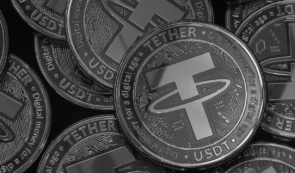
- USDT has become particularly useful because it provides dollar-denominated settlement without conventional dollar banking.
- TRM Labs attributed approximately $9.9 billion in crypto activity to Iran in 2025.
- The shift comes as U.S. enforcement increasingly targets the exchanges and financial intermediaries supporting Iran’s alternative payment channels.
The Central Bank of Iran has quietly loosened some foreign-exchange controls in recent months, allowing exporters greater flexibility in bringing overseas earnings home, including through digital assets, according to the Financial Times. Businesses can receive payments in USDT, Bitcoin and other cryptocurrencies through Iranian exchanges, with Tether emerging as the preferred option for many cross-border transactions.
Crypto Is Solving a Specific Problem for Iranian Exporters
Iran has used cryptocurrencies under sanctions for years, but the latest development is different in one important respect: authorities appear increasingly willing to tolerate their use in ordinary commercial settlement.
Iranian exporters are generally required to repatriate foreign-currency earnings. Strict controls historically forced companies to bring those funds back through approved mechanisms and exchange them under rules set by the central bank.
That system became increasingly difficult as sanctions isolated Iranian banks from international finance.
According to the FT, the central bank has recently given exporters greater freedom over how overseas earnings are returned and has reduced scrutiny over the original source of some foreign funds. Crypto is among the channels businesses are now using.
An executive at a government-linked Iranian company described receiving export payments in cryptocurrency as having become “completely normalized,” according to the FT.
The change gives exporters another route around the banking bottleneck. A foreign customer or intermediary can transfer digital assets, the Iranian business receives them through crypto infrastructure, and the funds can subsequently be exchanged or used for another international payment.
That can eliminate several correspondent banks from the transaction.
Why USDT Works Better Than Bitcoin for Trade Settlement
Bitcoin can bypass conventional banking infrastructure, but its volatility makes it less practical for invoices and short-term working capital.
USDT solves a different problem.
Its dollar peg allows an exporter to quote and receive a relatively stable dollar-denominated amount while settling the transaction on a blockchain rather than through a bank capable of clearing U.S. dollars.
That distinction is especially valuable in Iran, where the rial has experienced severe depreciation and businesses need access to stable units of account for international trade.
The FT reported that USDT is the most widely used cryptocurrency for these transactions, although Bitcoin and other digital assets are also accepted.
Stablecoins do not make sanctions disappear. Tether can freeze USDT addresses, exchanges can block sanctioned users, and blockchain transactions leave public records that analytics companies and authorities can follow.
They do, however, change where enforcement has to occur. Instead of stopping a payment through a correspondent bank before settlement, authorities may need to identify the parties, trace the blockchain flow and intervene through an exchange, stablecoin issuer or other identifiable intermediary.
Iran’s Crypto Economy Was Already Close to $10 Billion
The commercial shift is taking place on top of a sizeable existing crypto market.
TRM Labs attributed approximately $9.9 billion in cryptocurrency volume to Iran in 2025, broadly consistent with roughly $10 billion of activity the previous year. The company argues that the persistence of those flows despite sanctions and enforcement pressure indicates structural demand rather than purely speculative trading.
That figure includes both inbound and outbound activity and should not be interpreted as $9.9 billion of export payments or sanctions evasion.
READ MORE: Bitcoin Is Off Its Peak. Crypto’s Wealth Machine Didn’t
Crypto in Iran serves several purposes. Individuals use digital assets to preserve savings against currency depreciation, traders use them for international transfers, and state-linked actors have also used crypto infrastructure in ways that U.S. authorities say facilitate sanctions evasion.
The export-payment channel adds another category: commercial businesses using crypto because conventional cross-border settlement has become increasingly difficult.
Washington Is Targeting the Infrastructure Behind Those Flows
The timing is important because the United States is moving in the opposite direction.
Washington has intensified efforts to restrict Iran’s access to foreign financial networks and intermediaries. Recent measures have targeted banks, aviation companies and other entities accused of helping Tehran maintain access to international commerce.
Crypto infrastructure has also moved directly into the enforcement perimeter.
In June, the U.S. Treasury designated four major Iranian exchanges: Nobitex, Bit Pin, Wallex and Ramzinex. TRM Labs estimates that those platforms accounted for roughly 78% of Iran’s attributed crypto volume in 2025.
That creates an unusual tension.
Iran is becoming more permissive toward crypto settlement at roughly the same time that U.S. authorities are making the infrastructure supporting those transactions riskier for foreign counterparties.
An exporter may be able to receive USDT without using an international bank, but the exchange, wallet and counterparty involved can still create sanctions exposure.
For foreign businesses, that distinction is critical. A blockchain transaction does not make an otherwise prohibited transaction legally permissible.
Crypto Reduces Iran’s Dependence on Banks, Not Its Sanctions Risk
Iran’s experience demonstrates both the strength and the limit of cryptocurrency as sanctions-resistant financial infrastructure.
Digital assets can keep transferring value when banks refuse to process payments. They can also provide businesses with access to dollar-denominated liquidity without holding conventional dollar deposits.
But the surrounding infrastructure remains vulnerable.
Centralized exchanges have operators that can be sanctioned. Stablecoin issuers can block addresses. Blockchain analytics can reconstruct transaction networks. Foreign companies dealing with designated Iranian entities can face secondary sanctions even when no traditional bank handles the payment.
TRM’s data illustrates that pressure. Despite multiple rounds of enforcement, Iran still generated close to $10 billion of attributed crypto activity during 2025. Yet four exchanges responsible for most of that volume are now themselves U.S.-designated entities.
The more revealing development is therefore not simply that Iran is using crypto to evade financial isolation. That has been documented for years.
What appears to be changing is crypto’s place inside Iran’s legitimate commercial economy. If exporters increasingly treat USDT settlement as an ordinary way to receive foreign earnings, digital assets are becoming part of the country’s trade infrastructure rather than an emergency channel operating at its margins.
That also gives Washington a different enforcement problem. Restricting Iran’s access to correspondent banking may no longer be sufficient to interrupt every commercial payment. Enforcement increasingly has to follow the money beyond banks and into exchanges, stablecoin issuers and public blockchain networks.
The information presented in this article is intended for informational purposes only and should not be interpreted as financial, investment, or trading advice. Coinspress.com does not promote or advocate for any particular investment strategy, asset, or cryptocurrency project. Cryptocurrency markets are highly volatile and unpredictable – always perform your own research and seek guidance from a qualified financial professional before making any investment decisions.


Alexander Zdravkov


Reporter at CoinsPress
Alexander Zdravkov is a market analyst and crypto journalist with interests in economics, broader financial markets and digital assets. His journey into crypto began more than four years ago, driven by a fascination with the rapid evolution of blockchain technology and the transformative potential of decentralized finance. He began analyzing market cycles and identifying emerging trends before they reach the mainstream. He holds a degree in International Relations - a background that helped shape his broader perspective on global economics, geopolitics, and the interconnected nature of modern financial markets. Whether covering the latest developments in the crypto sector or exploring broader macroeconomic themes, Alexander focuses on giving readers context rather than simply repeating headlines. During his career, he has authored more than 10,000 articles covering cryptocurrencies, traditional finance, and global market developments. His work spans everything from Bitcoin and altcoins to macroeconomic trends influencing risk assets worldwide.