London Stock Exchange Plans xStocks Trading With Kraken Parent
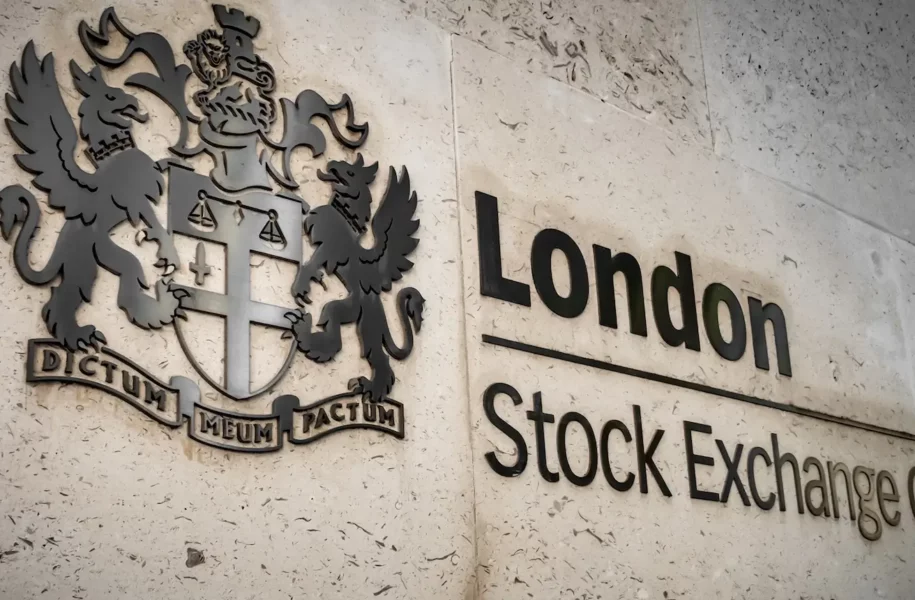
The London Stock Exchange is partnering with Kraken parent Payward to connect traditional market infrastructure with blockchain-based equities, with plans to bring xStocks to its upcoming LSE 24 trading venue in 2027.
Summary:
- LSE plans to bring xStocks to LSE 24 in 2027.
- Payward will connect tokenized assets with regulated market infrastructure.
- A separate project will explore rights-preserving tokenized UK shares.
- The rollout remains subject to regulatory approval.
Alongside the planned listing, the companies will explore a separate UK tokenized-equity structure designed to preserve the rights and protections associated with conventional shares.
xStocks are coming to LSE 24
The first part of the agreement involves xStocks, Payward’s framework for tokenized representations of publicly traded equities.
Each xStock is backed 1:1 by an underlying security and can move between supported centralized platforms, compatible self-custody wallets and blockchain applications.
Subject to regulatory approval, LSE intends to introduce the products through LSE 24 during 2027.
The venue itself is expected to begin operating with exchange-traded products in the first half of the year.
Despite its name, LSE 24 is not designed as a seven-day stock market. The venue will provide near-continuous weekday trading, operating from 17:00 until 07:50, with a 30-minute end-of-day processing break.
It will sit alongside rather than replace the LSE Main Market, whose regular trading session runs from 08:00 to 16:30.
That gives LSE a way to extend access outside conventional market hours without changing the structure of its primary trading session.
The 100 largest LSE stocks are the starting point
Payward also plans to bring tokenized versions of the 100 largest London-listed companies into the xStocks ecosystem.
That does not mean all 100 securities are immediately being listed for tokenized trading directly on the London Stock Exchange.
The rollout has two separate stages.
Payward can first expand the range of London-listed equities represented through xStocks in eligible international markets. LSE 24 would then provide a regulated exchange venue for the products in 2027, subject to approval.
The geographic restrictions are particularly important for British investors.
Kraken currently states that xStocks are not available to customers in the UK, as well as several other markets including the U.S., Canada and Australia.
The initial expansion can therefore increase international blockchain-based access to British companies without immediately making the same products available to UK retail customers.
What xStocks give investors, and what they don’t
The planned products provide blockchain-based exposure to equities, but they should not be confused with directly owning the underlying shares.
For investors, the main differences are:
- 1:1 backing: Each xStock is backed by the corresponding underlying security.
- Wallet portability: Tokens can move between supported platforms, compatible wallets and blockchain applications.
- Extended access: LSE 24 is designed for near-continuous weekday trading outside the Main Market’s regular session.
- No conventional voting rights: Holding an xStock does not provide the same governance rights as directly owning the underlying share.
- Different dividend treatment: Distributions can be reflected through additional token balances rather than conventional cash dividend payments.
- UK access remains restricted: Kraken currently does not offer xStocks to customers in the UK.
This is where the second part of the LSE-Payward partnership becomes more significant.
The companies are separately examining a UK tokenized-equity structure capable of preserving shareholder rights, investor protections and public-market governance.
Instead of creating a blockchain representation backed by a security held elsewhere, that model would move closer to making the regulated security itself compatible with digital market infrastructure.
LSE is building the infrastructure behind tokenized shares
Creating a token is only one part of moving equities onto blockchain infrastructure.
A regulated security still needs legally recognized ownership records, settlement, payment infrastructure and processes for corporate actions.
READ MORE: Nomura’s Crypto Strategy in Japan Starts With Liquidity, Not Retail
LSEG has been developing systems for those functions.
Its Digital Securities Depository (DSD) is intended to support the issuance, recording, transfer, settlement and servicing of tokenized securities.
A separate Digital Settlement House (DiSH) addresses the payment side. It is designed to enable programmable settlement between blockchain networks and conventional financial systems using commercial-bank money.
The Payward partnership adds another layer by examining wallet-based access and connectivity between blockchain ecosystems and LSEG’s regulated markets.
That connection will still need to satisfy conventional financial requirements, including anti-money-laundering controls and operational-resilience standards.
The result is more ambitious than putting stock prices on a blockchain. LSEG is assembling infrastructure that could connect digital ownership, regulated trading and cash settlement within the same broader market framework.
Payward is building connections to more than one exchange
The London agreement is not Payward’s first attempt to connect blockchain infrastructure with a major securities exchange.
In March, the company announced a partnership with Nasdaq to develop an Equities Transformation Gateway connecting regulated tokenized securities with permissionless blockchain markets.
xStocks infrastructure is expected to provide part of the bridge between those environments.
The two agreements reveal a broader role for Payward beyond operating the Kraken exchange.
Rather than requiring every traditional exchange to build its own blockchain distribution network, Payward can provide infrastructure connecting regulated securities with wallets and on-chain markets. Kraken can then operate as one distribution channel within that larger system.
xStocks has already developed meaningful scale outside the UK. Payward says the network has generated more than $37 billion in cumulative transaction volume and reached close to 200,000 holders globally.
Tokenized equities still face an ownership problem
The expansion comes with a regulatory issue that has followed tokenized stocks since their introduction.
The World Federation of Exchanges has warned that tokenized equity products can create investor-protection and market-integrity risks when customers do not clearly understand what they own.
That concern is particularly relevant when a token follows the price of a listed company but does not provide the legal rights attached to its ordinary shares.
LSE’s two-track strategy provides one possible response.
xStocks offer a faster route for distributing equity exposure through blockchain infrastructure. The separate UK tokenized-equity project tackles the harder question of whether the actual regulated ownership structure can eventually move on-chain.
If both reach the market, investors could encounter products that look similar inside a digital wallet but are legally very different.
One would be a token backed by a share.
The other could eventually be the share itself.
That legal distinction will matter more than whether either product can trade outside normal exchange hours. If tokenized equities are to move beyond crypto platforms and become part of mainstream capital markets, ownership rights, settlement and investor protection have to move with the technology.
The information presented in this article is intended for informational purposes only and should not be interpreted as financial, investment, or trading advice. Coinspress.com does not promote or advocate for any particular investment strategy, asset, or cryptocurrency project. Cryptocurrency markets are highly volatile and unpredictable – always perform your own research and seek guidance from a qualified financial professional before making any investment decisions.


Kosta Gushterov


Reporter at CoinsPress
Kosta has reported on cryptocurrency markets and blockchain infrastructure since 2020, bringing over six years of hands-on experience in the crypto industry built through daily tracking of markets, trends, and emerging blockchain developments. Specializing in Bitcoin on-chain analysis, institutional ETF flows, and digital asset price action, his work has been cited by other news agencies and consistently covers market developments with a focus on data-driven reporting across Bitcoin, Ethereum, Solana, and XRP. Over the years, Kosta has contributed to multiple crypto media outlets in different regions, authoring over 6,000 articles across the sector. His reporting spans cryptocurrency markets and the broader fintech industry, tracking not only price action but also the technological and regulatory forces shaping the ecosystem. To support his analysis, Kosta actively leverages on-chain data and metrics from leading platforms such as Santiment, Glassnode, and CryptoQuant, enabling deeper, evidence-based market insights. He believes in the power of transparency and the data that underpins the blockchain ecosystem. His academic background in Marketing Management from Denmark further complements his analytical approach, adding a strong understanding of communication strategy and content positioning to his work.