OCC Clears Path for Stablecoin Rewards, Dropping Presumption of Illegal Yield
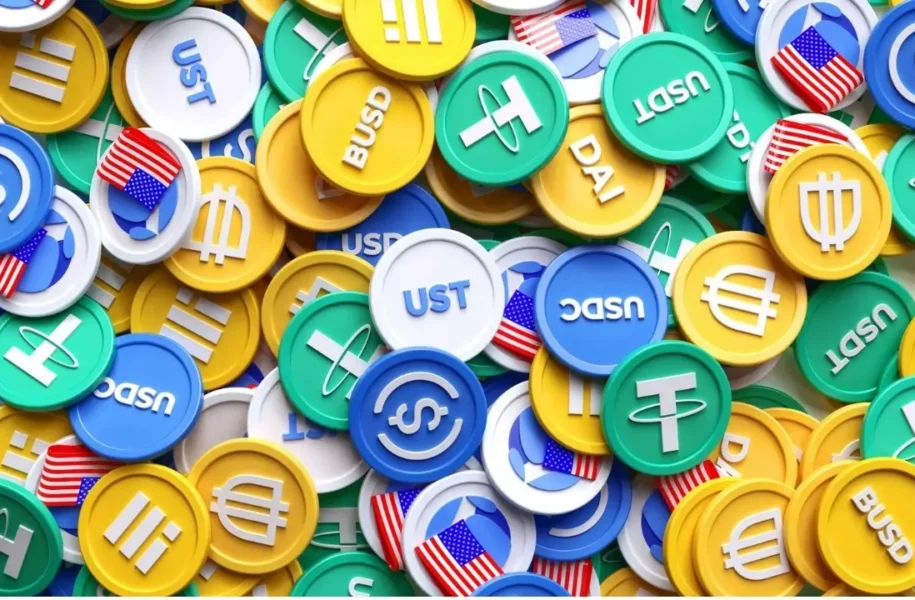
The battle over stablecoin rewards is becoming a defining test of how crypto platforms and traditional banks compete for customers.
Summary:
- The OCC removed a proposed presumption against certain third-party stablecoin rewards arrangements, opting for case-by-case regulatory scrutiny.
- USDT and USDC represent approximately $255 billion in combined market capitalization, highlighting the commercial stakes of the decision.
- Circle reported $668 million in quarterly reserve income against $412 million in distribution, transaction and other costs.
The Office of the Comptroller of the Currency (OCC) has removed a proposed presumption that certain third-party stablecoin rewards arrangements violate the GENIUS Act, preserving room for crypto exchanges to offer customer incentives while leaving the prohibition on issuer-paid interest intact.
The decision comes amid substantial competition for dollar-backed tokens. On October 21, Tether’s USDT had a market capitalization of $182.71 billion, while Circle’s USDC stood at $72.12 billion, according to a CoinMarketCap data. Their combined capitalization reached approximately $254.83 billion.
The central regulatory conflict concerns whether exchanges can compensate customers for maintaining stablecoin balances without effectively distributing interest funded by the issuer.
In its final rule announced Wednesday, the OCC abandoned the proposed rebuttable presumption and chose to evaluate individual arrangements through supervision and enforcement. The change gives platforms greater flexibility to defend their business models, but does not establish that existing rewards programs comply with federal law.
Why the OCC Changed Its Approach to Stablecoin Rewards
The GENIUS Act, signed into law in July 2025, prohibits permitted payment stablecoin issuers from paying interest or yield solely in connection with holding, using or retaining payment stablecoins.
The OCC initially proposed a rebuttable presumption addressing certain payments involving issuers, affiliates and intermediaries. The intention was to prevent issuers from avoiding the statutory restriction by routing compensation through third parties.
Following public comments, the agency decided against retaining that presumption in its final regulations.
The revised approach leaves regulators to assess the economic substance of specific arrangements rather than treating predefined commercial relationships as presumptively unlawful.
For example, an issuer might pay an exchange to provide liquidity, integrate payment infrastructure or distribute its token. Those services can have independent commercial value.
An arrangement becomes more legally sensitive if payments are structured to compensate holders for retaining stablecoins, particularly where the issuer directs or funds the compensation.
The OCC has not published a definitive list of permitted and prohibited rewards structures. Nor does the removal of the presumption create a blanket exemption for existing programs.
Comptroller of the Currency Jonathan Gould emphasized the broader regulatory objectives in the agency’s official announcement:
“We are providing a clear, practical framework for payment stablecoin innovation, with strong standards for reserve backing, redemption, and risk management.”
The statement addresses the overall framework rather than granting specific approval to rewards arrangements. The OCC’s decision to leave those arrangements subject to individual assessment is therefore a consequential part of the final rule.
Circle’s Financial Results Reveal the Economics Behind Distribution
Circle’s latest quarterly disclosures provide a measurable example of the financial incentives surrounding stablecoin distribution.
In the second quarter of 2026, the company reported $668 million in reserve income, an increase of 5% from a year earlier. Higher average USDC circulation supported revenue, although the reserve return rate declined by 66 basis points.
Circle also recorded $412 million in distribution, transaction and other costs, up 1% year over year, primarily because of increased distribution payments. Other revenue totaled $34 million, while net income reached $48 million.
These figures, disclosed in Circle’s August earnings release, demonstrate how reserve earnings support a business model that also requires substantial spending on commercial relationships. They do not establish that the reported distribution costs were paid to stablecoin holders as rewards.
$668M
$412M
The $412 million expense category equaled approximately 61.7% of reported reserve income. That comparison is useful for understanding the scale of distribution-related spending, although it is not a measure of Circle’s profit margin.
The business incentives run in different directions. Issuers can benefit from larger reserve balances, subject to prevailing interest rates and investment returns. Exchanges can benefit from trading activity, customer retention and commercial distribution agreements.
A rewards program may support those objectives. Its legal treatment, however, depends on whether the arrangement represents independent platform expenditure or an indirect transfer of prohibited issuer-funded yield.
What Stablecoin Holders and Exchanges Should Check Before January
For customers earning rewards on USDC or other stablecoins, the OCC’s decision does not establish that current rates will increase, decrease or disappear.
Platforms may continue reviewing their programs as the GENIUS Act approaches implementation, but no specific change to Coinbase, Binance or another exchange’s rewards offering can be inferred from the final rule alone.
Customers evaluating a stablecoin rewards product should examine:
- Source of payments: Whether the platform funds rewards itself, receives issuer-related compensation or generates returns through lending and investment activities.
- Use of assets: Whether deposited stablecoins remain in custody or can be transferred, lent, pledged or otherwise deployed.
- Withdrawal conditions: Whether rewards or redemptions can be suspended, restricted or modified.
- Customer protection: Whether the arrangement involves counterparty or investment exposure beyond the risks of holding the stablecoin itself.
A 3% stablecoin reward should not be treated as equivalent to a 3% yield on an eligible FDIC-insured bank deposit. Stablecoins are not themselves federally insured deposits, and platform arrangements may introduce additional risks.
For exchanges and fintech companies, the more difficult questions concern contractual terms.
An agreement that compensates a platform for liquidity provision or payment infrastructure may have a legitimate commercial purpose. An agreement requiring the platform to distribute issuer-funded payments according to customer stablecoin balances could raise concerns under the prohibition on indirect yield.
Compliance teams therefore need to examine the relationship between contractual obligations, payment calculations and actual customer incentives. Describing a payment as a marketing expense or distribution fee does not necessarily determine its legal treatment.
The OCC has also declined to give pre-existing rewards arrangements special treatment.
Banks Face an Unresolved Competition Problem
Traditional banks have raised concerns that stablecoin rewards could attract balances away from deposit accounts, potentially increasing funding costs and reducing resources available for lending.
However, stablecoin circulation cannot be equated directly with deposit withdrawals. Dollar-backed tokens are also used for trading, international transfers, payments and settlement, and their holders may not otherwise have maintained equivalent balances in U.S. bank accounts.
READ MORE: France Backs Crypto-to-Stablecoin Tax Rule in 2027 Budget
The regulatory difference between issuers and intermediaries remains particularly important.
Banks compete for deposits partly through interest payments, while payment stablecoin issuers are prohibited from offering comparable yield solely for holding their tokens. Third-party platforms may nevertheless have commercial reasons to provide customer incentives.
That distinction could preserve a competitive advantage for exchanges able to demonstrate that their rewards are genuinely independent of prohibited issuer payments.
The Federal Reserve’s September 2026 proposal provides an additional complication. Its proposed treatment of certain third-party arrangements included a rebuttable presumption, creating a potential difference between the Fed’s proposed approach and the OCC’s finalized framework.
Because the Federal Reserve proposal is not final, businesses should not assume that every federal regulator will ultimately adopt identical rules.
The January Deadline Leaves Rewards Agreements Under Scrutiny
The OCC’s regulations take effect on January 18, 2027, alongside the GENIUS Act. They establish requirements covering reserves, redemptions, custody, risk management and supervision.
Comptroller Gould said the agency is establishing standards for payment stablecoin innovation while maintaining reserve-backing and risk-management protections.
Separate rules addressing the Bank Secrecy Act, anti-money laundering and sanctions obligations remain outstanding. The OCC will also announce when it begins accepting applications and waiver requests from prospective issuers.
The immediate commercial question is whether exchanges can substantiate the independence of their customer rewards from issuer-funded payments.
Circle’s financial results show why distribution relationships carry substantial economic value. The OCC’s final rule leaves those relationships open to regulatory examination rather than resolving their legality through a broad presumption.
For platforms offering stablecoin rewards, the structure and funding of those arrangements may prove more consequential than the advertised yield.
The information presented in this article is intended for informational purposes only and should not be interpreted as financial, investment, or trading advice. Coinspress.com does not promote or advocate for any particular investment strategy, asset, or cryptocurrency project. Cryptocurrency markets are highly volatile and unpredictable – always perform your own research and seek guidance from a qualified financial professional before making any investment decisions.


Kosta Gushterov


Reporter at CoinsPress
Kosta has reported on cryptocurrency markets and blockchain infrastructure since 2020, bringing over six years of hands-on experience in the crypto industry built through daily tracking of markets, trends, and emerging blockchain developments. Specializing in Bitcoin on-chain analysis, institutional ETF flows, and digital asset price action, his work has been cited by other news agencies and consistently covers market developments with a focus on data-driven reporting across Bitcoin, Ethereum, Solana, and XRP. Over the years, Kosta has contributed to multiple crypto media outlets in different regions, authoring over 6,000 articles across the sector. His reporting spans cryptocurrency markets and the broader fintech industry, tracking not only price action but also the technological and regulatory forces shaping the ecosystem. To support his analysis, Kosta actively leverages on-chain data and metrics from leading platforms such as Santiment, Glassnode, and CryptoQuant, enabling deeper, evidence-based market insights. He believes in the power of transparency and the data that underpins the blockchain ecosystem. His academic background in Marketing Management from Denmark further complements his analytical approach, adding a strong understanding of communication strategy and content positioning to his work.