Sparkassen’s Crypto Launch Puts Exchanges’ Retail Model to the Test
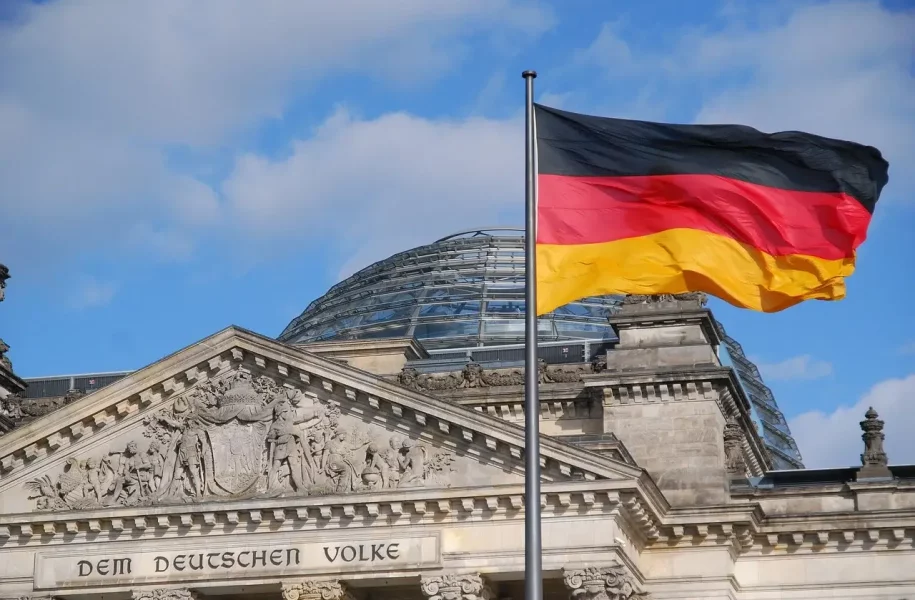
Germany's Sparkassen savings-bank network is entering cryptocurrency trading with an advantage that specialist exchanges have spent years trying to build: direct access to an established retail banking customer base.
Summary:
- Germany’s Sparkassen network began rolling out crypto trading on October 19, starting with participating savings banks rather than all customers.
- The service could reduce customer acquisition barriers by bringing crypto into an existing banking relationship.
- DekaBank and Börse Stuttgart Digital divide the banking and trading infrastructure, offering a model other financial institutions could adopt.
- Transaction charges, spreads and custody restrictions will determine whether convenience is enough to compete with dedicated exchanges.
The network began rolling out Krypto: powered by Deka on October 19, allowing customers at participating savings banks to trade Bitcoin (BTC), Ethereum(ETH), XRP, Solana (SOL) and Polygon (POL) through the existing Sparkasse app.
Sparkassen serves nearly 50 million customers, but the launch does not give all of them immediate access. Individual savings banks must participate, and the number of customers who will actively trade remains unknown.
The commercial significance lies in how the service reaches investors. Rather than building a standalone cryptocurrency exchange,
Sparkassen is incorporating digital-asset trading into a banking relationship that customers already use for payments, savings and investments.
Why Existing Bank Customers Could Be More Valuable Than New Exchange Accounts
Customer acquisition is a significant expense for retail financial platforms. A cryptocurrency exchange must attract prospective users, establish trust, complete identity checks and persuade customers to fund their accounts.
Sparkassen already has much of that relationship in place.
For eligible customers, the new service removes the need to select an unfamiliar cryptocurrency platform or establish a separate banking relationship solely to obtain digital-asset exposure.
That does not eliminate regulatory onboarding requirements for cryptocurrency services. Customers still need to satisfy the applicable account-opening and compliance procedures. However, integrating those steps into an established banking app could reduce the practical friction of entering the market.
This creates an opportunity to reach investors who are interested in Bitcoin but have avoided dedicated exchanges because of perceived complexity, unfamiliar custody arrangements or concerns about transferring funds between providers.
The commercial question is whether convenience can compensate for a narrower asset selection and potentially higher trading costs.
The Infrastructure Model Changes Who Owns the Customer
Sparkassen’s arrangement separates customer distribution from the infrastructure needed to execute cryptocurrency trades.
DekaBank provides the trading service, pricing and custody, while Börse Stuttgart Digital supplies institutional cryptocurrency liquidity. The companies formalized the expanded partnership in October 2025, according to Börse Stuttgart Digital’s official announcement.
This division allows participating savings banks to offer crypto without individually operating exchanges or building blockchain custody systems. It also illustrates a possible shift in the competitive landscape: traditional banks can retain the customer-facing relationship while specialist financial infrastructure firms operate behind the scenes.
The model creates opportunities for several participants. Savings banks can expand their investment offering, DekaBank can distribute crypto services through existing channels, and Börse Stuttgart Digital can support trading volumes without needing to acquire each retail customer directly.
It does not follow that specialist exchanges will lose market share. Some may retain advantages in asset selection, pricing, advanced order types and withdrawal flexibility.
Convenience Has a Price and a Custody Trade-Off
The service charges €0.99 per order plus a spread. That fixed fee represents 0.99% of a €100 purchase but only 0.099% of a €1,000 purchase, before the spread.
For a customer investing €100 monthly, the fixed purchase charges would total €11.88 over a year. The actual cost could be materially higher depending on the quoted spread.
READ MORE: BingX EU Secures Austria MiCA License for Four Crypto Services
There are also limits on asset control. DekaBank’s official product information states that customer private keys are held in an omnibus wallet and that withdrawals are permitted only to wallet addresses belonging to certain crypto-asset service providers. Transfers to other addresses are excluded.
That arrangement offers managed custody, but customers cannot freely move their holdings to any personal wallet. DekaBank also warns that cryptocurrency investments are not protected by statutory deposit insurance.
The competitive trade-off is therefore specific: easier access through a familiar banking app in exchange for limited transfer flexibility and the costs embedded in the trading quote.
The Rollout Will Test Distribution, Not Just Crypto Demand
Sparkassen’s decentralized structure means participation depends on individual savings banks. Reporting around the October launch indicates that more than 230 institutions have expressed interest, with approximately 30 to 40 expected to join monthly.
Those figures describe institutional interest, not customer adoption. There are no confirmed network-wide figures showing how many customers have funded crypto accounts or how much trading volume the launch has generated.
Three indicators will provide a clearer picture as the rollout develops:
- Funded accounts: Whether customers who already use Sparkasse for banking actually open and fund crypto accounts.
- Trading activity: Whether customers generate meaningful recurring transaction volume rather than making a single exploratory purchase.
- Customer retention: Whether integrated crypto access reduces the need for customers to use outside investment platforms.
The wider significance is the potential separation of cryptocurrency distribution from cryptocurrency infrastructure. If banks can attract sufficient trading activity through existing customer relationships, crypto specialists may increasingly compete to supply those banks rather than only compete for consumers directly.
For Sparkassen, the test begins with five assets and a limited number of participating institutions. The eventual results will show whether traditional banking relationships can become an effective distribution advantage in retail crypto.
The information presented in this article is intended for informational purposes only and should not be interpreted as financial, investment, or trading advice. Coinspress.com does not promote or advocate for any particular investment strategy, asset, or cryptocurrency project. Cryptocurrency markets are highly volatile and unpredictable – always perform your own research and seek guidance from a qualified financial professional before making any investment decisions.


Alexander Zdravkov


Reporter at CoinsPress
Alexander Zdravkov is a market analyst and crypto journalist with interests in economics, broader financial markets and digital assets. His journey into crypto began more than four years ago, driven by a fascination with the rapid evolution of blockchain technology and the transformative potential of decentralized finance. He began analyzing market cycles and identifying emerging trends before they reach the mainstream. He holds a degree in International Relations - a background that helped shape his broader perspective on global economics, geopolitics, and the interconnected nature of modern financial markets. Whether covering the latest developments in the crypto sector or exploring broader macroeconomic themes, Alexander focuses on giving readers context rather than simply repeating headlines. During his career, he has authored more than 10,000 articles covering cryptocurrencies, traditional finance, and global market developments. His work spans everything from Bitcoin and altcoins to macroeconomic trends influencing risk assets worldwide.